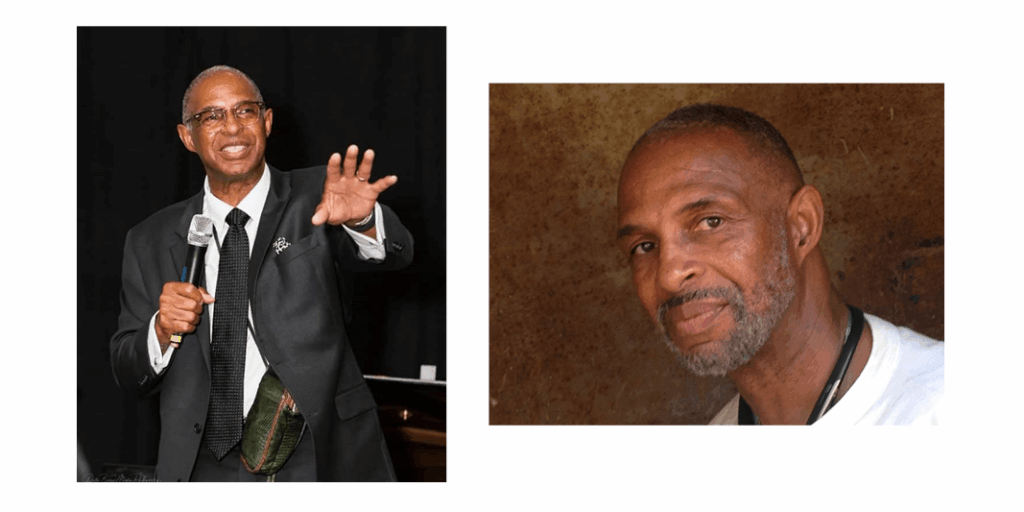
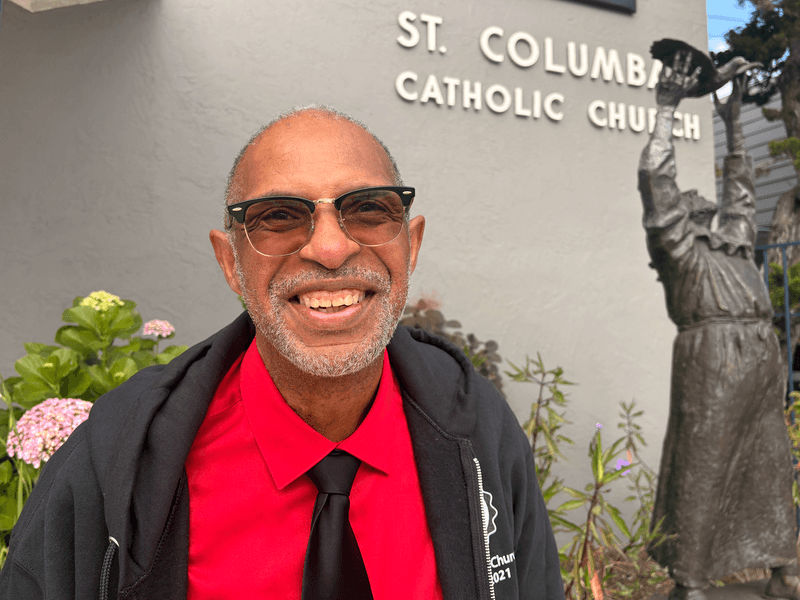
Beyond the Walls: Maurice Harper and the Living Faith of St. Columba
Listen to the podcast
Maurice Harper’s early years were shaped by faith, family, and the vibrant community of St. Columba Catholic Church, a parish that would become both his spiritual home and the foundation of his lifelong commitment to justice and service.
His story begins in the heart of Berkeley, where his parents—migrants from Arkansas and Texas—settled after time in San Francisco. Growing up in St. Columba, Harper attended Sacred Heart School, where he first learned the value of education as a tool for empowerment. “People in the community are what kept me coming to church,” he reflects. The parish was more than a place of worship—it was a living network of relationships, a space where faith met action and where young people were encouraged to see the world beyond the church walls.
The parish was more than a place of worship—it was a living network of relationships, a space where faith met action and where young people were encouraged to see the world beyond the church walls.
At St. Mary’s High School in Berkeley, Harper encountered a blend of students from across Oakland and Berkeley. The diversity of voices and experiences opened his eyes to social justice issues and the power of dialogue. He recalls the era vividly—the National Guard stationed in Berkeley, students marching in protest, and a growing awareness of the need for solidarity. Those formative years deepened his understanding of racism, rights, and the responsibility to act.
Harper continued his education at St. Mary’s College in Moraga, where his studies in history and social justice further grounded his belief that education and faith are inseparable from community engagement. His career in education would span decades, including serving as principal at Sacred Heart—his own alma mater—and later at St. Martin de Porres. He eventually retired as an administrator from the San Francisco Unified School District, but his work in education never truly ended. “Education is an exchange,” he says. “My students also teach me.” For Harper, teaching was always a two-way relationship rooted in mutual respect and shared growth.
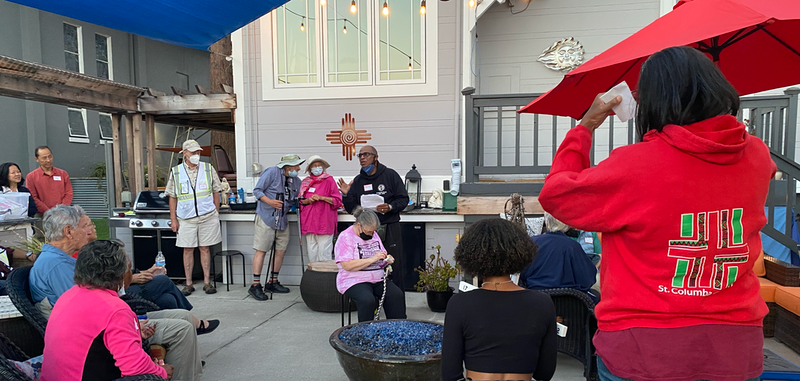
Through every chapter of his life, St. Columba remained his anchor. The parish’s commitment to community organizing, particularly through its partnership with Faith in Action East Bay (FIAEB; formerly Oakland Community Organizations–OCO), shaped Harper’s understanding of what it means to live one’s faith.
“Community is not the building of St. Columba or its members,” he explains. “The church is the world. If there is anybody hungry or hurting, we are all hungry and hurting. We have a responsibility to respond.”
That sense of responsibility has guided Harper’s involvement in countless initiatives—poverty relief, immigrant protection, education advocacy, and community clean-ups. As president of St. Vincent de Paul, he ensures that immigrant families in need receive food and support while their identities remain protected. He is also working alongside other FIAEB leaders to push for stronger city ordinances safeguarding immigrant rights.
“We are all immigrants,” he says. “There is not a separation there. There are people under attack who need our support. It allows us to respond and be hopeful.”
“We are all immigrants,” he says. “There is not a separation there. There are people under attack who need our support. It allows us to respond and be hopeful.”
At St. Columba, Harper serves on the pastoral council, helping guide conversations about how the parish can best serve the wider community. He values the parish’s culture of listening—listening to one another, to the needs that arise, and to the Spirit that calls them outward. Each Pentecost, the parish gathers for a unique Mass that is a communal dialogue about shared concerns and collective action.
“Because we are about welcoming people, we get a lot of perspectives that draw us in or draw us out into the community,” Harper says.
For Harper, the heart of community organizing lies in relationships. The one-to-one conversations central to FIAEB’s work are, for him, sacred encounters. “They allow me to share my passion for what’s affecting me, but they also bond me to that person because I get to hear what they are passionate about,” he explains. “Their issue becomes my issue because that person is my person.” Whether the concern is education, immigration, or incarceration, Harper sees each as a shared human responsibility.
Even in retirement, Harper’s energy for justice remains undiminished. “I am retired, but I can’t be tired,” he says with a smile. The youthful energy of organizers and the steadfast faith of his community continue to inspire him. “The thing I celebrate most is that FIAEB provides a tireless way to gather and stay informed. I have hope because something is taking place to make things better.”
For Maurice Harper, faith is not confined to pews or parish walls. It is lived out in the streets, schools, and halls of government. It is a faith that listens, acts, and builds bridges—one relationship at a time.